Buenos Aires
Unchained Melody
Aizicovich /
Curator
Text by Javier Villa
Aug. 20, 2026 — Nov. 15, 2026
About exhibition
In numerous mythological narratives, descending into the depths means temporarily leaving the known world in order to return with new knowledge, a gem, or a force capable of enriching the community. In many of these stories, the one who undertakes this journey is the “trickster,” an ambiguous figure who crosses boundaries, breaks rules, and establishes exchanges between worlds.
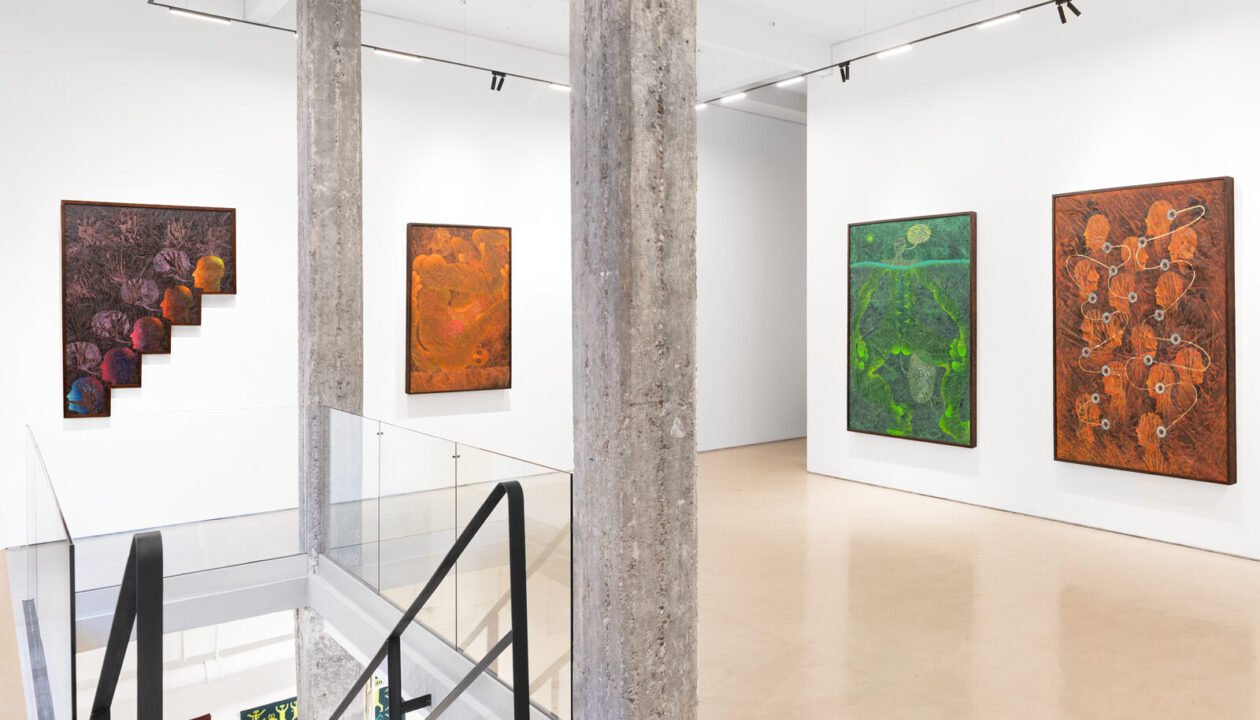
In Melodía encadenada, Andrés Aizicovich (Buenos Aires, 1985) revisits the image of immersion—a journey toward that which does not yet have a form—in order to think, inseparably, about the creative act and communication. Both emerge as pendulum-like movements between an inside and an outside; between intimate experience and that which manages to be offered in transformed form.
In numerous mythological narratives, descending into the depths means temporarily leaving the known world in order to return with new knowledge, a gem, or a force capable of enriching the community. In many of these stories, the one who undertakes this journey is the “trickster,” an ambiguous figure who crosses boundaries, breaks rules, and establishes exchanges between worlds. In Melodía encadenada, Andrés Aizicovich (Buenos Aires, 1985) revisits the image of immersion—a journey toward that which does not yet have a form—in order to think, inseparably, about the creative act and communication. Both emerge as pendulum-like movements between an inside and an outside; between intimate experience and that which manages to be offered in transformed form.
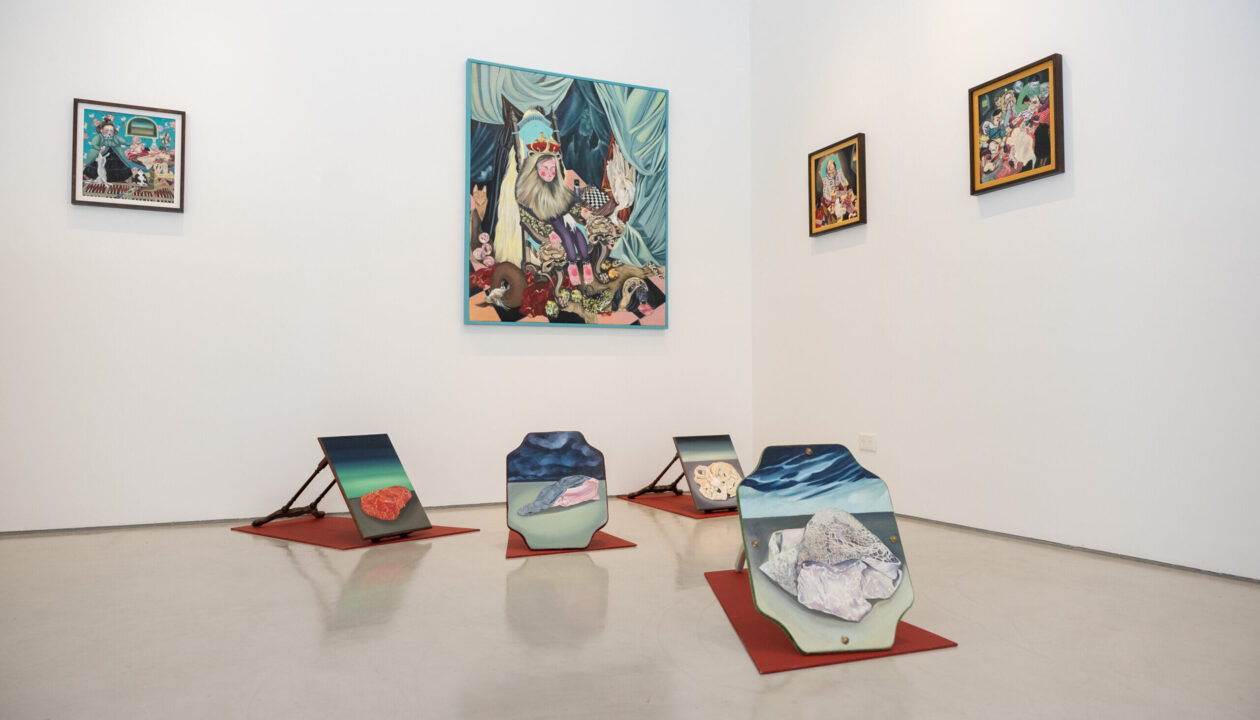
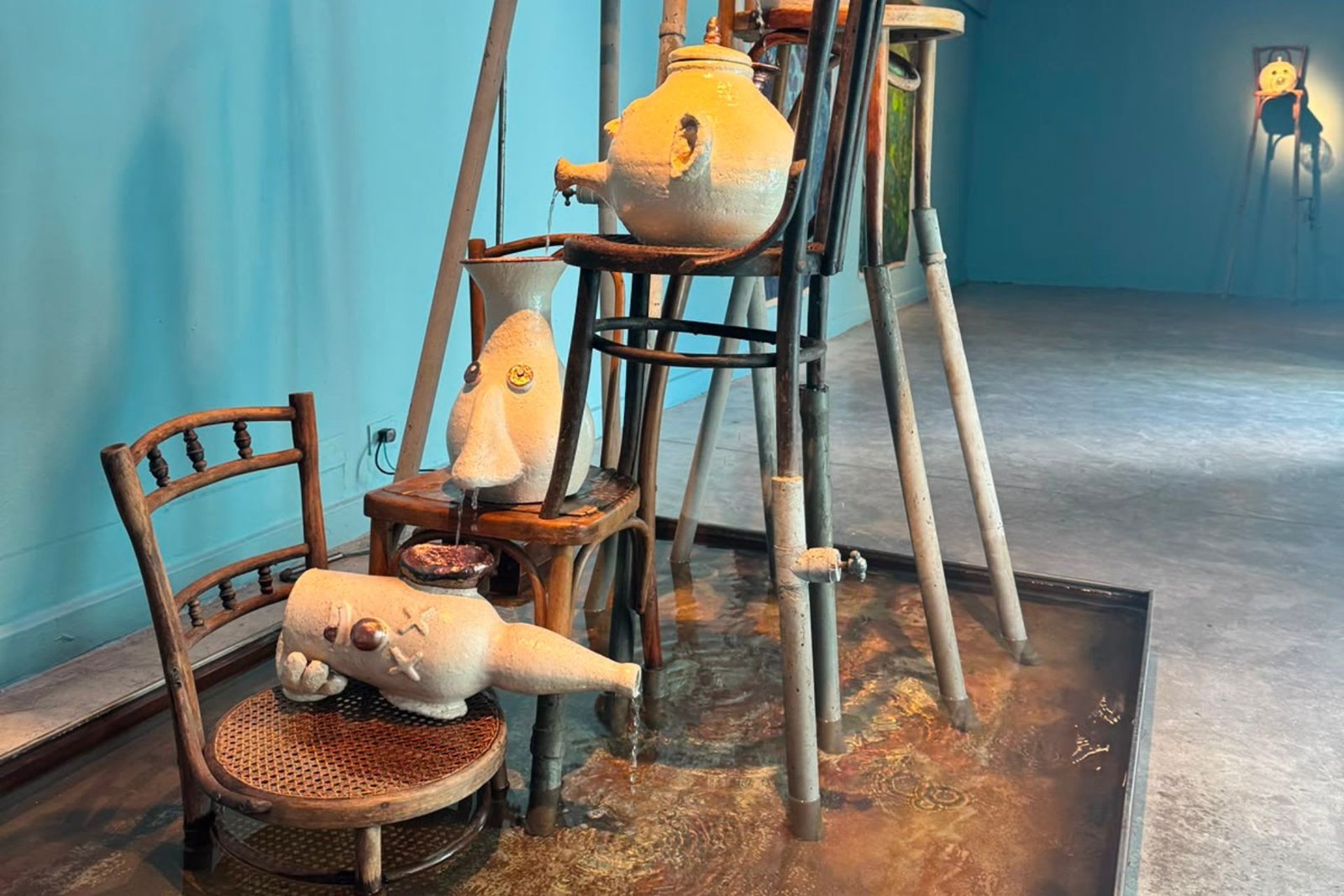
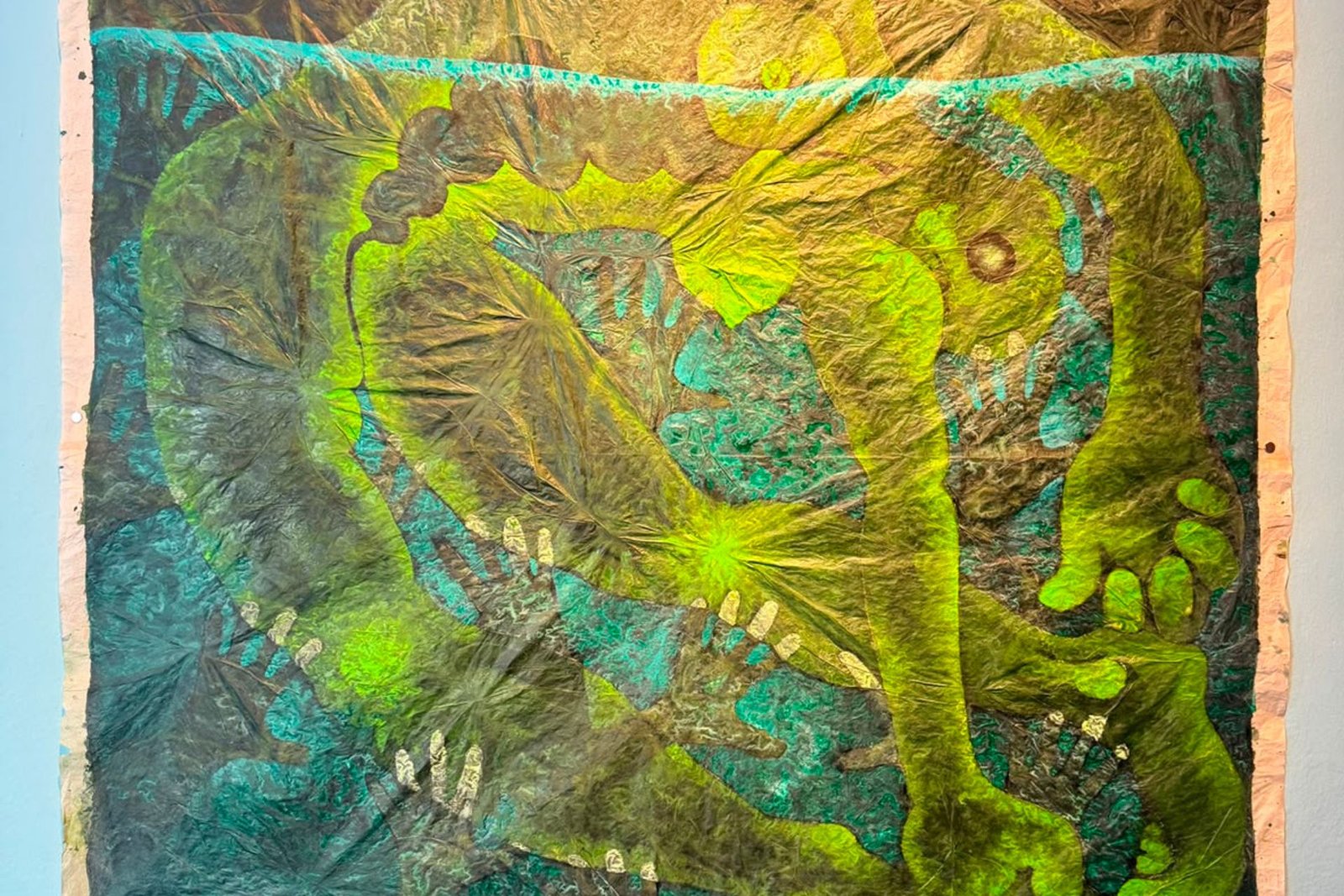
In his new series of paintings, Aizicovich traverses floating and contorted bodies with a line of water that functions as a formal threshold between surface and depth. This waterline does not divide two realms, but rather opens a zone of passage where corporeality operates as an interface between an inner and an outer world. In this sense, the body is a vessel; an alchemical membrane that receives, decants, metabolizes, and ultimately manifests itself. The sculptural installation, for its part, shifts this individual condition toward a collective dimension. Five vessel-heads circulate water through a closed circuit. The fountain proposes an image of transmission, of that which passes from one generation to another or from one voice to the next. Water makes visible and audible a normally intangible flow: that of memory, narratives, and the forms through which a community understands the world. Every inheritance is also a form of metabolism. The fountain moves time, while the vessel preserves and transforms what it pours forth.
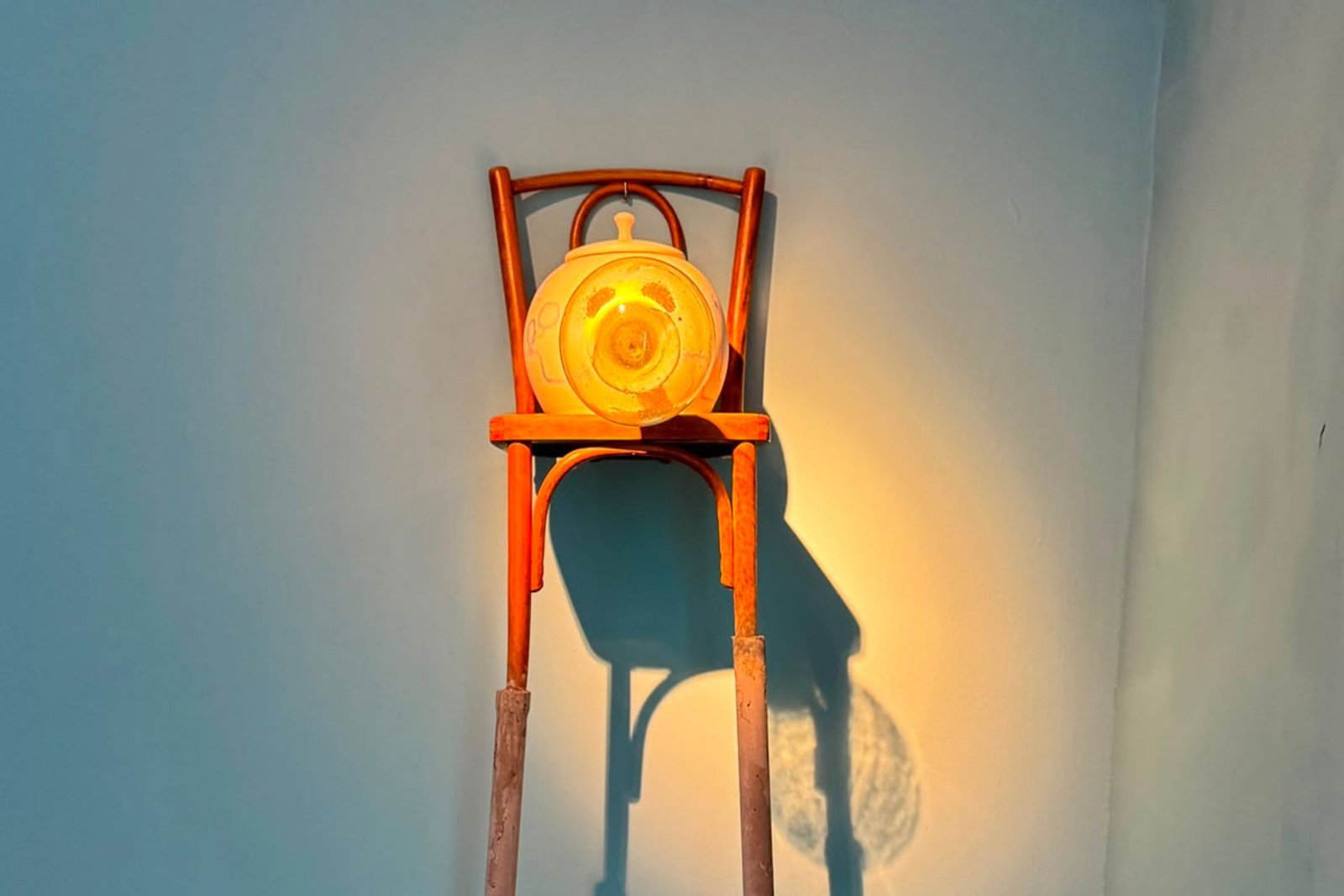
At the end of the journey, an isolated head extends its mouth into a trumpet from which emerges a blown-glass sphere. If water represents the continuous movement of communication, glass seems to crystallize it. Speech acquires a body at the same time that it loses its fluidity. The piece thus pushes its own paradox to the limit: making something visible can also mean immobilizing it. Communication seems to carry an irreducible dimension of fatality. Like a fossil, it preserves the trace of a voice that can no longer continue to transform. The work points to the limit of every metabolic process: that which no longer circulates also ceases to produce new forms.
In Aizicovich’s work, interior and exterior do not necessarily designate spatial positions, but rather states between which the body, matter, and language move incessantly. The depths of water, the intestine, the cave, or outer space all form part of the same narrative, in which knowing implies crossing a threshold, immersing oneself, and returning. In a movement that oscillates between the continuity of what has been inherited and the emergence of the unexpected, the creative act reveals itself as an alchemical operation.

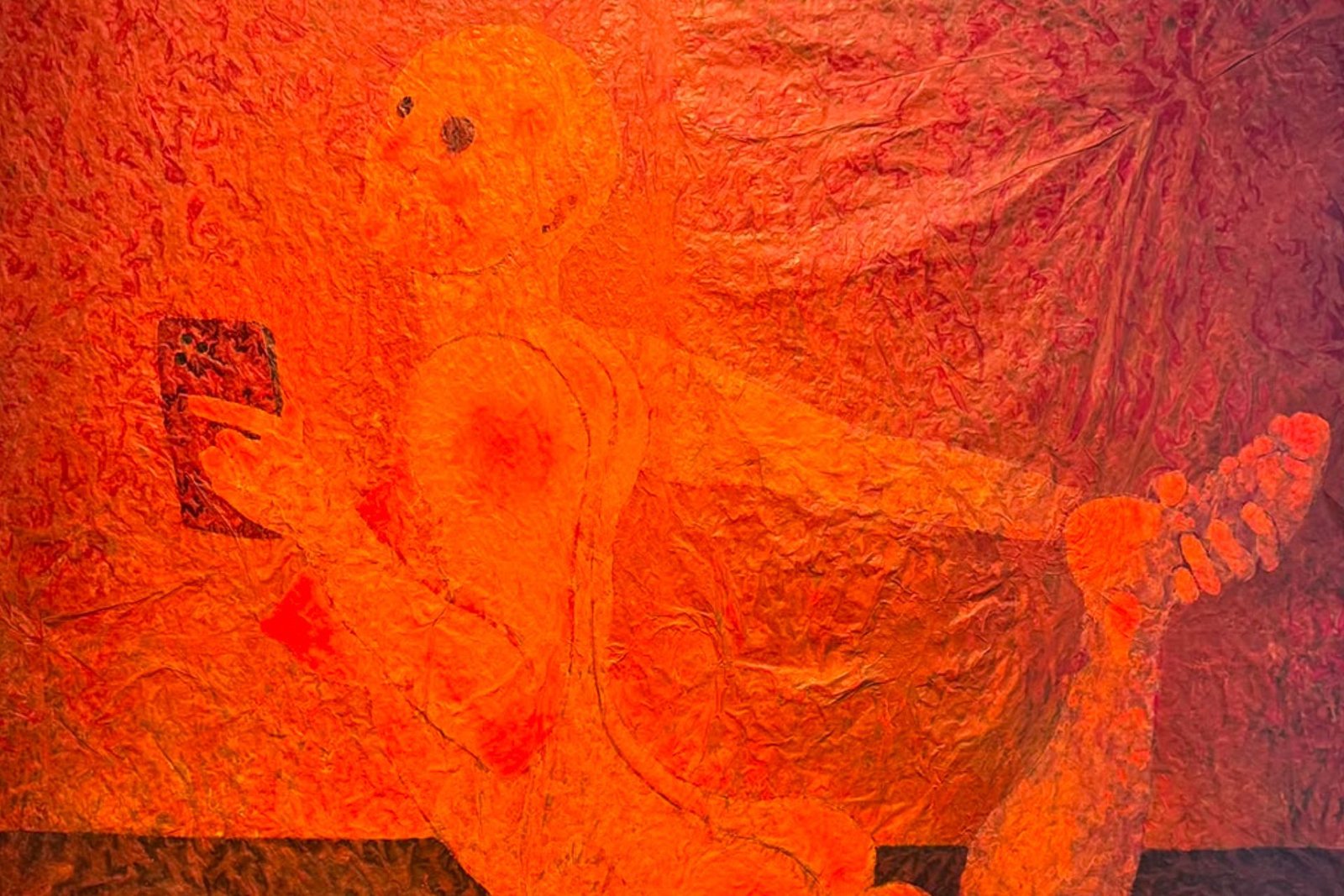
Pocetti /
Cured of fright
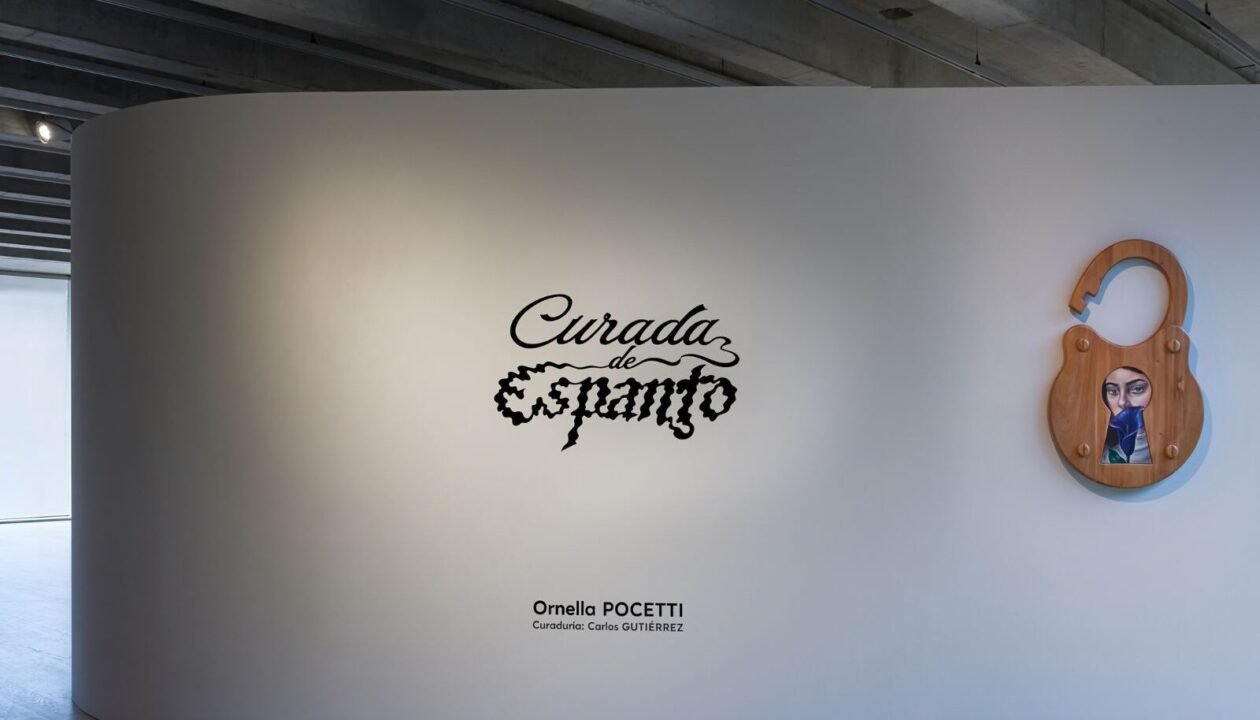
Renata Juncadella / Verónica Gómez /
Bringing the edges of the night
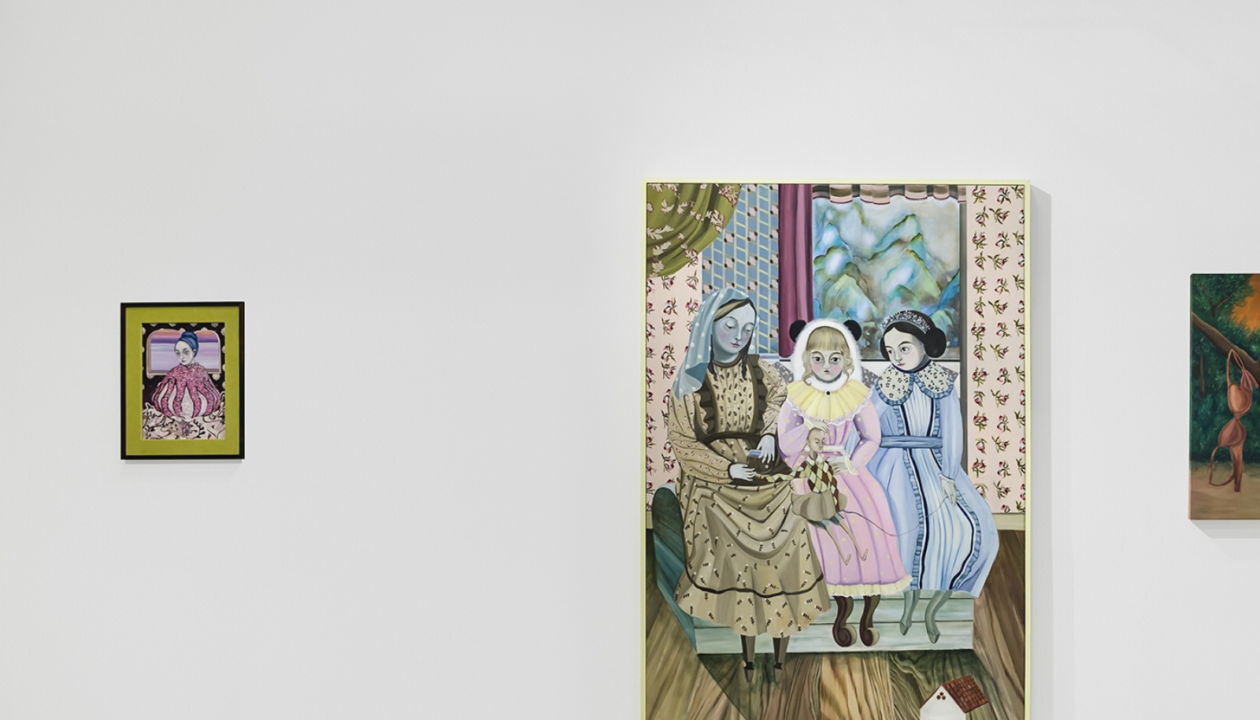
Canevari /
Force majeure
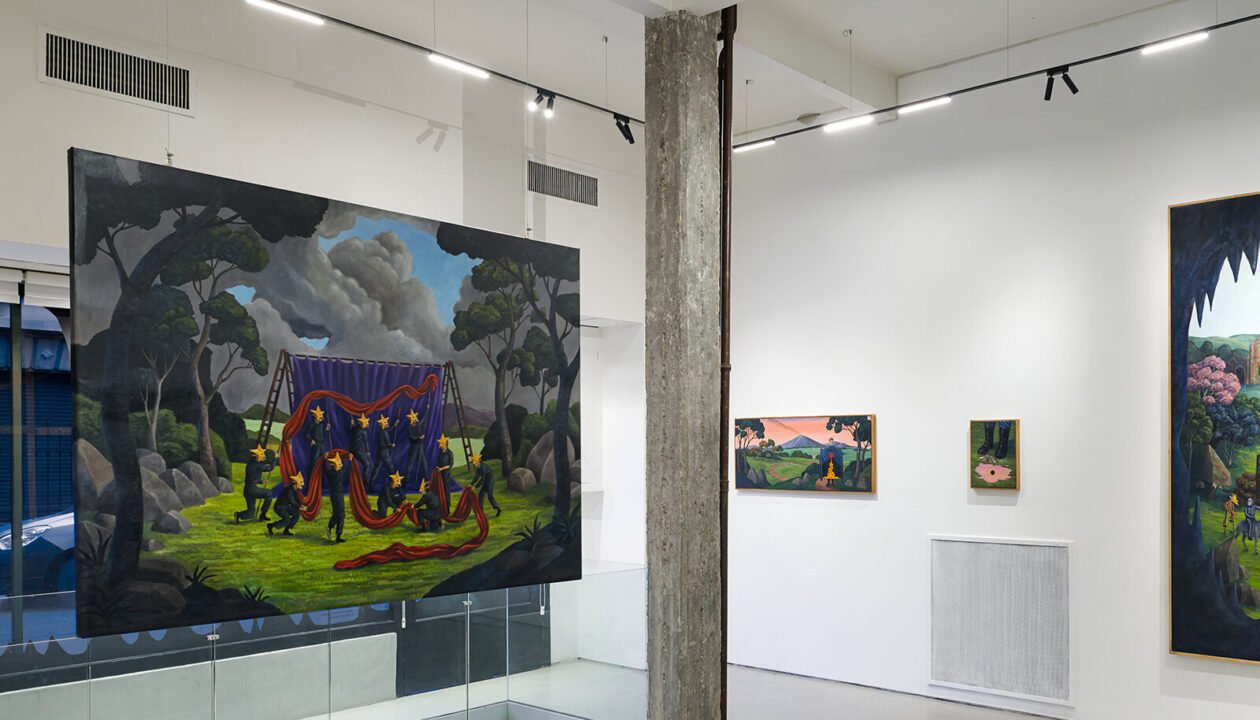
Aizicovich /
Speak so I can see you
PECCI CAROU /
The Vigil of Eros
LEVY /
Third Spectral Atomic
PAREDES /
A handful of earth
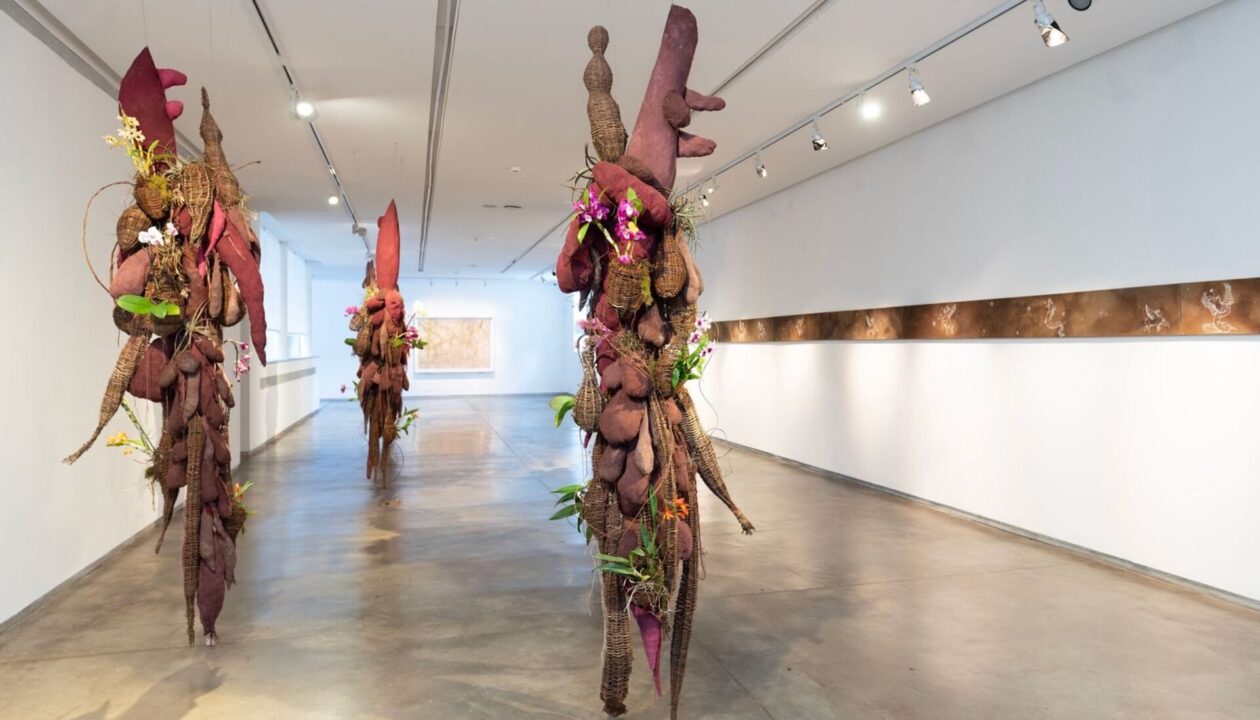
JUNCADELLA /
What cuts is a shortcut
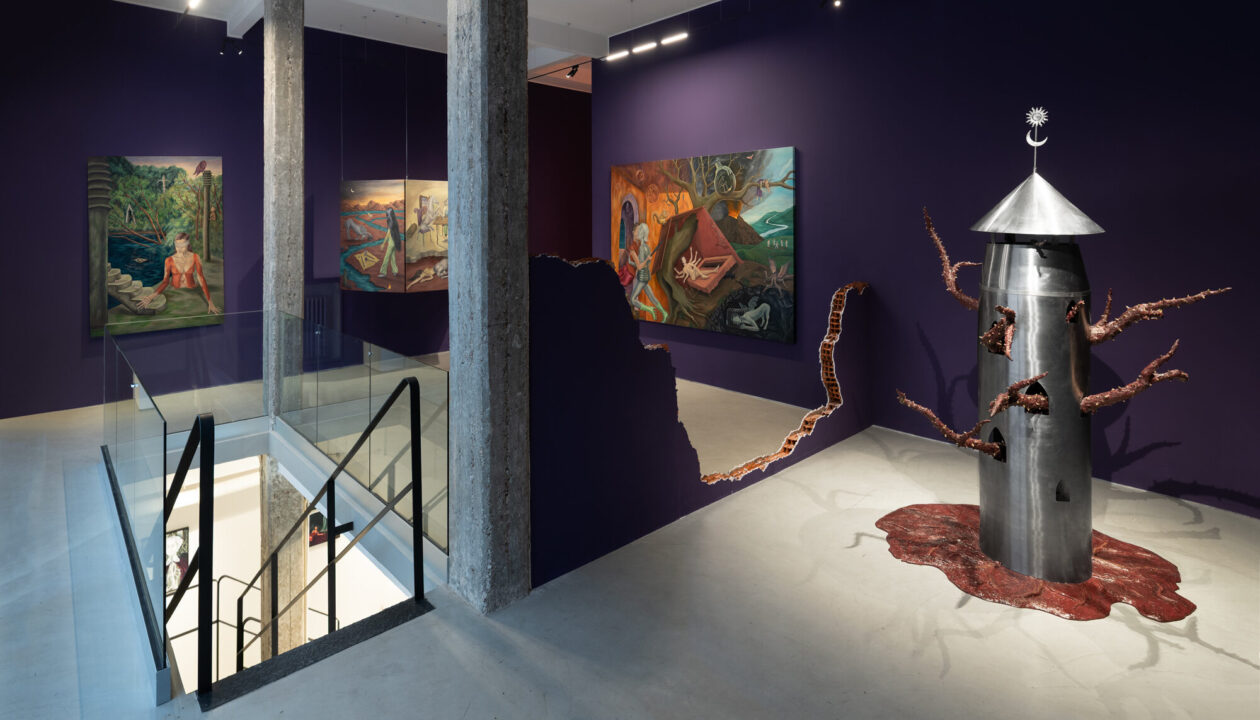
GIMÉNEZ /
Shell for something immense
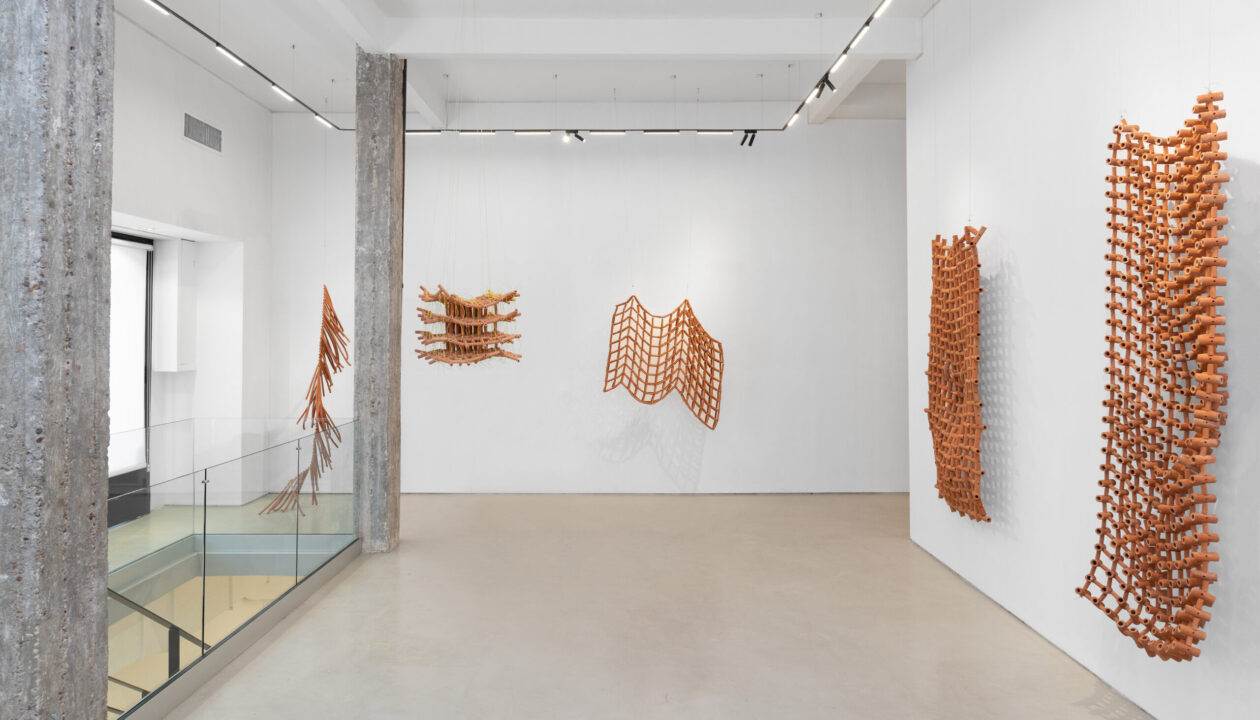
CALFAT /
Principle of innerness

PAREDES /
El jardín interior

VALENTINI /
La frontera fantasma

GRADÍN /
Genealogía Vegetal

GÓMEZ /
Las vestiduras peligrosas